
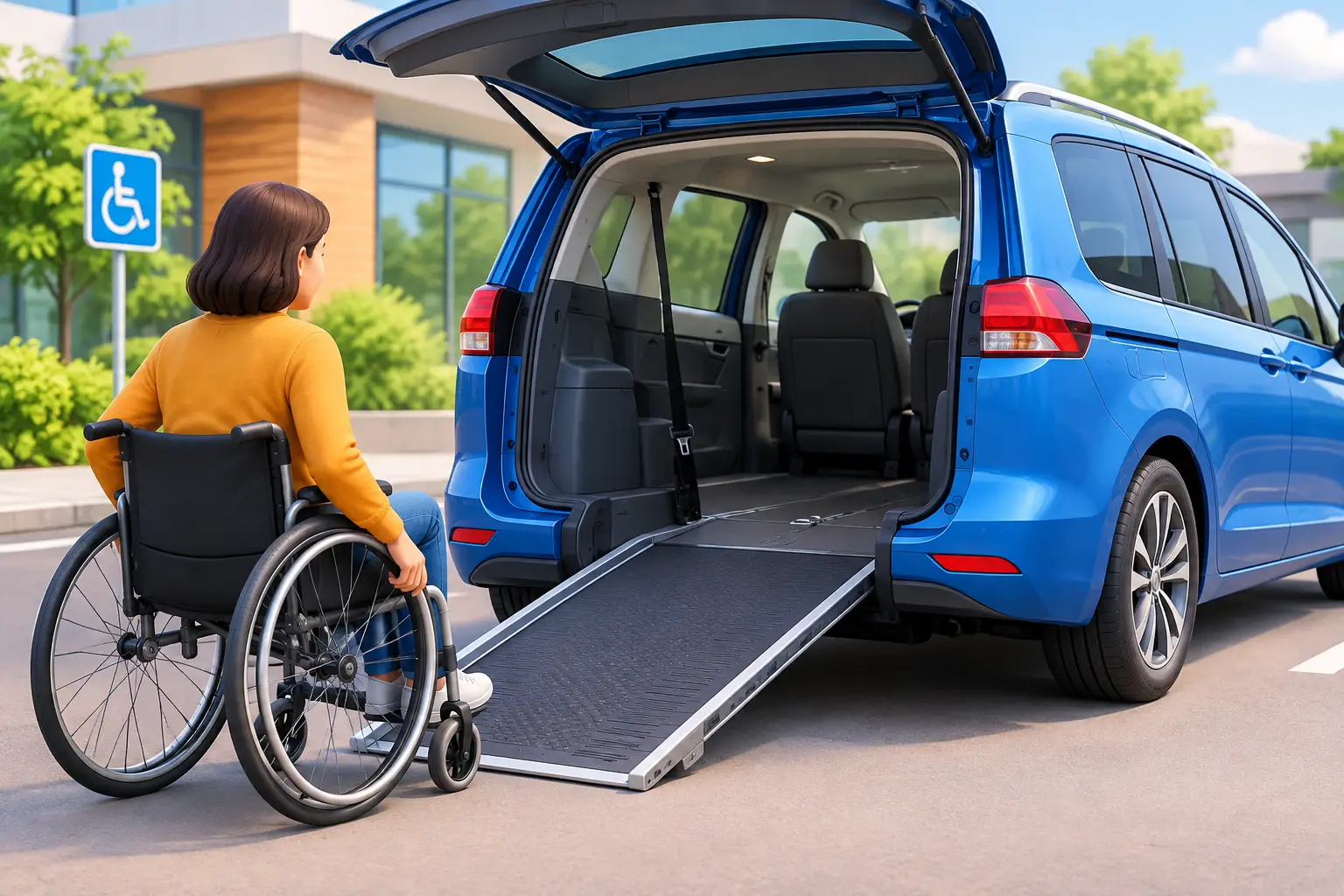
A vehicle can have plenty of room for luggage and still be unsuitable for a passenger who uses a wheelchair. So, are vehicles wheelchair friendly? Sometimes, but never assume that an MPV, minibus or large car is accessible simply because it looks spacious. The right answer depends on the vehicle, the wheelchair, whether the passenger remains seated in it, and the support needed for the journey.
For airport collections, family days out, hospital appointments and special occasions, the details matter. A straightforward conversation before booking can make the difference between a calm, comfortable journey and an awkward wait at the kerb.
What makes a vehicle wheelchair friendly?
A wheelchair-friendly vehicle should allow the passenger to enter, travel and leave safely, with enough room for both the person and their mobility equipment. For many passengers, that means a purpose-adapted wheelchair-accessible vehicle, often called a WAV, with a ramp or lift, suitable headroom, approved wheelchair restraints and a passenger safety belt.
It is not the same as a car with a large boot. If a passenger can transfer safely into a standard seat and the wheelchair folds, a conventional estate car or MPV may be suitable. However, this arrangement is not right for everyone. It also depends on whether the chair can be folded, how heavy it is, and whether there is enough protected space for it alongside luggage.
A passenger who needs to stay in their wheelchair during travel needs a vehicle designed and equipped for that purpose. There must be a safe way to board, secure anchor points for the chair, and a correctly fitted occupant restraint. Comfort matters too. A long airport journey is not the time to discover that the passenger's position is cramped or that their chair cannot be secured properly.
Are vehicles wheelchair friendly for airport travel?
Airport travel adds a few practical pressures. There may be suitcases, hand luggage, travelling companions, an early collection time and a return flight that is delayed. That is why it is worth booking the right vehicle in advance rather than relying on availability at the airport rank.
Start with the journey itself. A wheelchair user travelling to Liverpool John Lennon Airport may need different arrangements from a family returning to Merseyside with several large cases. Manchester Airport transfers can involve a longer road journey, so seating position, comfort breaks and secure storage become even more relevant.
For arrivals, confirm where the driver will meet you and how flight delays are handled. A planned meet-and-greet can reduce the stress of finding transport after a long flight, particularly when assistance, luggage and mobility equipment all need to be coordinated. It is also sensible to allow time for the passenger to disembark at a comfortable pace rather than feeling rushed by a waiting queue.
The questions to ask before you book
The most useful booking information is specific. Saying "wheelchair user" is a helpful starting point, but it does not tell a transport provider everything needed to allocate a safe vehicle.
Explain whether the passenger will remain in their wheelchair for the journey or transfer into a vehicle seat. Share the wheelchair type too: manual, powered, folding or rigid-frame. Powered chairs and scooters vary greatly in weight, width and height, and some cannot safely be carried in a standard vehicle even if there appears to be room.
It also helps to confirm the following details in one conversation:
- The wheelchair's approximate width, length, height and weight
- Whether it folds, and whether batteries or detachable parts are involved
- The number of passengers travelling, including any personal assistant or carer
- The amount and size of luggage, especially for airport or cruise-port trips
- Any boarding requirements, such as a ramp, lift, extra time or help with bags
These are not unnecessary questions. They help avoid a vehicle arriving that is too small, lacks the correct equipment or cannot carry luggage once the wheelchair is onboard. A reputable provider should be open about what a particular vehicle can and cannot accommodate.
Space alone is not enough
There is a common misunderstanding that a seven- or eight-seat vehicle will automatically work for a wheelchair user. In reality, additional seats can reduce usable storage space. Once several passengers and full-size suitcases are included, a vehicle that seemed ideal can become impractical.
The same applies to minibuses. Some have generous passenger capacity but are not fitted with a ramp, lift or approved wheelchair securing system. Others are adapted for wheelchair travel but have a different seating layout, meaning the total number of travelling passengers may be lower. There is no one-size-fits-all answer, which is why a clear quote should be based on the actual requirements rather than a guess.
For a folded manual wheelchair, the key question may be boot capacity. For a passenger staying in their chair, the priority is safe access and restraint. For an electric wheelchair or mobility scooter, payload limits and dimensions may determine whether a vehicle is suitable. Being accurate protects everyone involved.
Safety, dignity and a comfortable journey
Accessible travel is about more than reaching the destination. Passengers should be able to travel with dignity, without being lifted unsafely, squeezed into unsuitable seating or made to feel that their needs are an inconvenience.
A properly equipped accessible vehicle should use the correct restraint system for the wheelchair and an occupant belt for the passenger. Wheelchair brakes alone are not a travel restraint. The driver should have the time and training to secure equipment carefully before setting off, then check that the passenger is comfortable.
If the passenger can transfer from their chair, do not assume the driver can physically lift them. Discuss the assistance required beforehand and bring any transfer equipment needed. This avoids unsafe expectations at collection and allows the journey to be planned realistically.
For children, older passengers and anyone with additional needs, mention these requirements at the time of booking. You may need room for a car seat, walking frame, oxygen equipment or a companion. Good planning is personal, not complicated.
Why pre-booking makes a difference
A pre-booked journey gives the transport provider time to match the right vehicle to the passenger and confirm the practical details. It also gives you a named point of contact if plans change. This is particularly valuable for early airport departures, late-night returns, weddings, concerts and major events, when last-minute options can be limited.
Price should be clear as well. Accessibility should not mean being left uncertain about the fare, extra waiting time or luggage arrangements. Ask for the agreed journey details in advance, including collection address, destination, passenger numbers and any mobility equipment being carried.
At City of Liverpool Tours, the most helpful approach is to share your requirements when requesting a quote, so suitability can be confirmed before the journey is arranged. A dedicated driver and pre-agreed plan offer far more reassurance than hoping the next available vehicle will fit.
A quick check before collection
Before travel day, make sure the collection time, address and contact number are correct. Keep essential medication, phone chargers, travel documents and any items needed during the journey within easy reach rather than packed beneath luggage. If the wheelchair has detachable cushions, controllers or footplates, check that these are secured for travel.
If your flight changes, let your transport provider know as soon as possible. Likewise, if a wheelchair has been replaced or upgraded since the original booking, mention it. A few centimetres of extra width or the additional weight of a powered model can change the vehicle required.
The best accessible journey is the one that feels ordinary: the right vehicle arrives on time, the passenger boards safely, luggage fits, and everyone can focus on the trip ahead rather than the transport logistics.